
Table of Contents
Understanding Uncertainty in Hydrodynamic Modelling
by Ravel Barnard – Senior Consultant & Hydrodynamic Lead at WKC Group
Hydrodynamic modelling is an incredibly powerful tool for environmental assessment and engineering design. It can help us explore how water may move, how a coastline or marine environment may respond to changing conditions, and how proposed developments could influence the surrounding system.
However, a model is not the real world but rather an approximation of it. Understanding that distinction is fundamental when modelling responsibly.
In the 1970’s British statistician George E.P. Box coined the phrase ‘all models are wrong, but some are useful’. Box emphasised that while models are simplifications of complex systems, they can still provide useful outputs when used properly and when we understand their limitations.
What is a Hydrodynamic Model?
Put simply, a hydrodynamic model is a mathematical-based representation of how water moves and behaves. It combines information such as seabed topography, tides, currents, waves and wind with mathematical equations that describe the physics of water movement.
The result is a simulation of how an environment may respond under different conditions. Depending on the purpose of the study, this may support environmental impact assessment, coastal and marine engineering design, discharge assessment, flood-risk evaluation or the investigation of sediment movement.
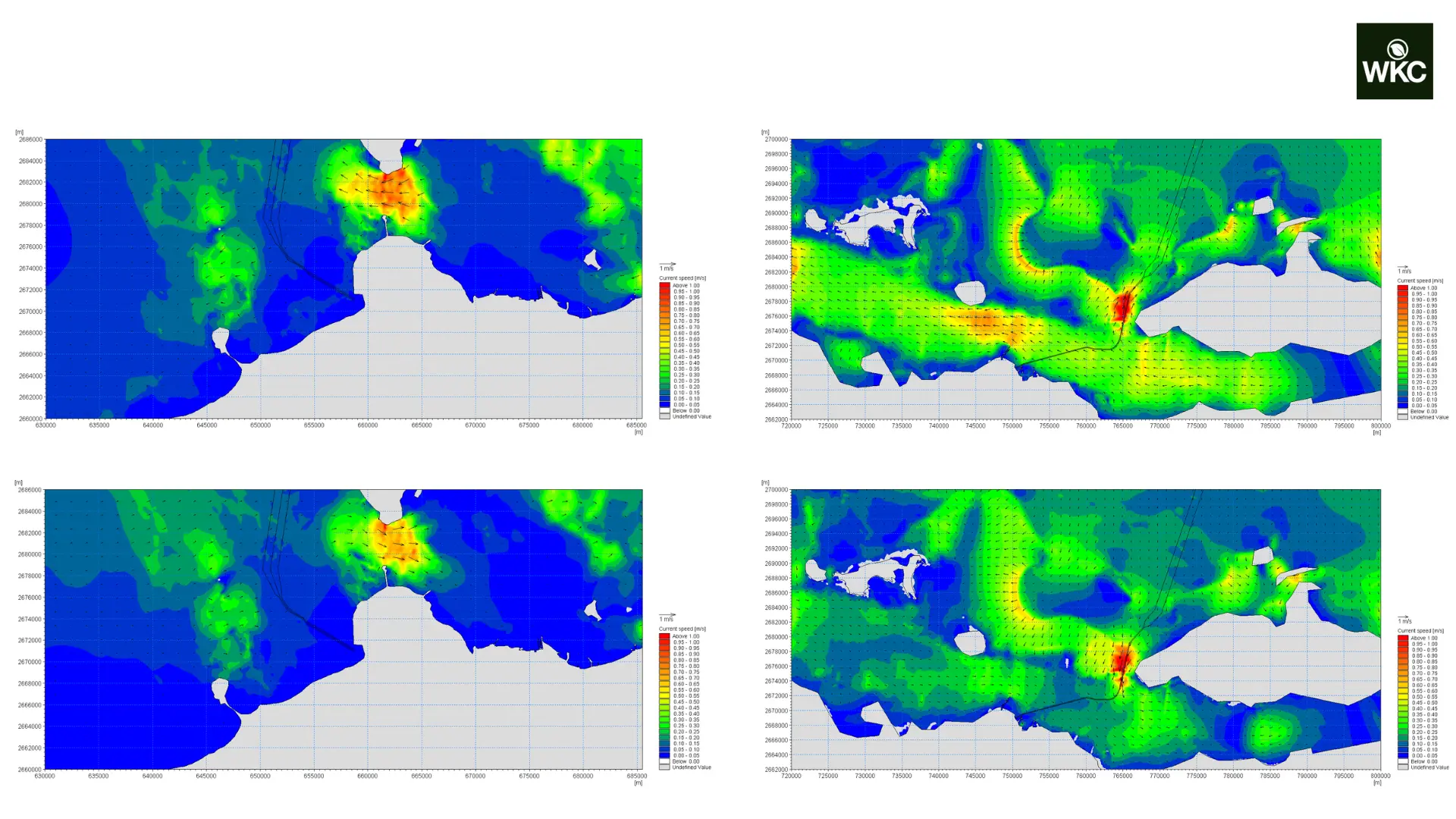
Simulated depth-averaged current speeds and flow directions during a representative tidal condition in Abu Dhabi, UAE.
Why Every Model Begins with Uncertainty
Every model starts with data, and every dataset carries some uncertainty.
Measurements are collected at specific locations and over limited periods, using instruments that have their own tolerances. Bathymetry is a snapshot of a seabed that may be constantly changing. Tides, waves and winds vary over time and, particularly in future scenarios, cannot be predicted with complete certainty.
Such examples of input uncertainty exist before the model has performed its first calculation.
There are also assumptions within the model itself. Parameters such as bed roughness, turbulence characteristics and sediment properties represent complex physical processes that cannot always be measured directly. The modeller must therefore make technically defensible choices based on available evidence, experience and the purpose of the study.
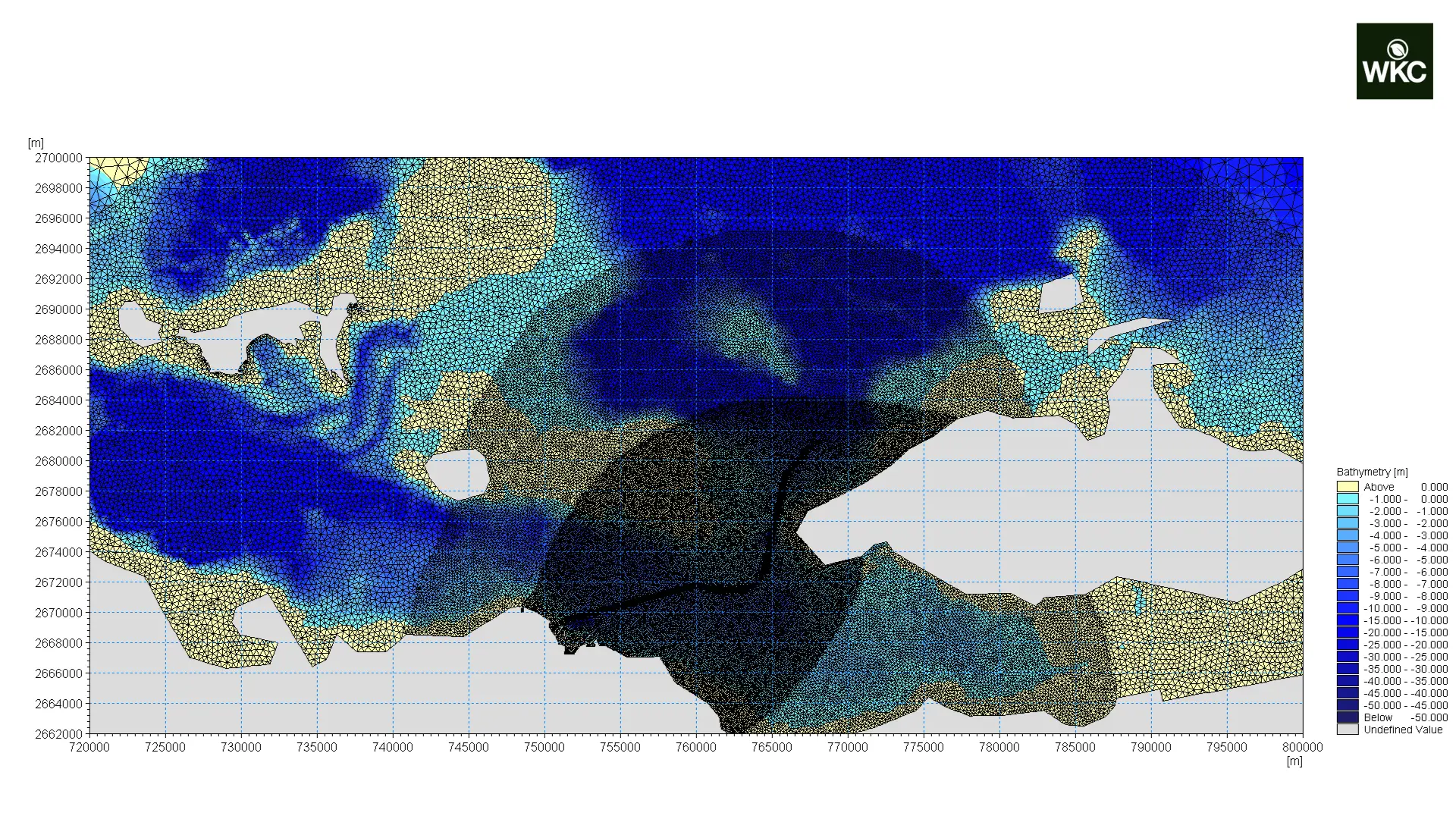
A variable computational mesh and bathymetry used to represent the physical characteristics of a coastal modelling domain in Abu Dhabi, UAE.
Calibration Builds Confidence, Not Certainty
Calibration is one of the most important steps in building confidence in a hydrodynamic model. Model predictions are compared with observed conditions, and selected parameters are adjusted so that the model can reproduce the behaviour recorded in the field.
However, a well-calibrated model is not a perfect model, and it never will be. Observations carry their own uncertainties, monitoring is limited in space and time, and different combinations of model parameters can sometimes produce similar results.
While no amount of calibration can turn a mathematical simulation into reality, calibration demonstrates that a model can adequately reproduce observed behaviour.
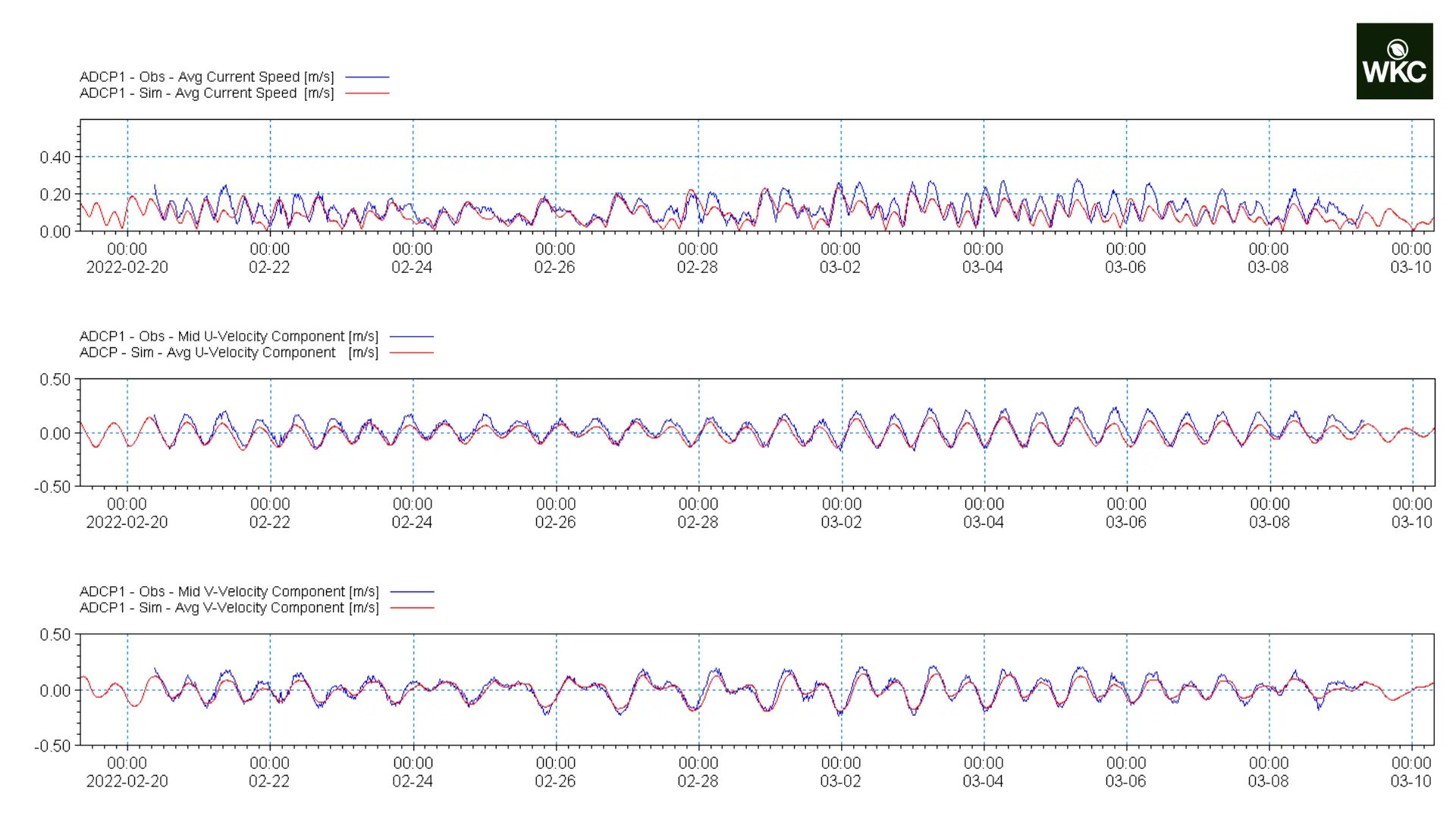
Comparing simulated results with observed field measurements helps evaluate how well a hydrodynamic model reproduces real-world conditions.
Why Sensitivity Testing Matters
When uncertainty could materially influence an outcome, relying on a single simulation can create a false sense of precision. This is where sensitivity testing becomes valuable.
By running multiple simulations with different plausible assumptions, input parameters or environmental conditions, modellers can investigate whether the conclusions remain consistent or change significantly. This helps identify which assumptions matter most and where additional data or caution may be required.
A range of possible outcomes may appear less definitive than a single colourful contour plot. In practice, however, it often provides more useful information for decision-making because it shows the conditions under which a conclusion remains robust.
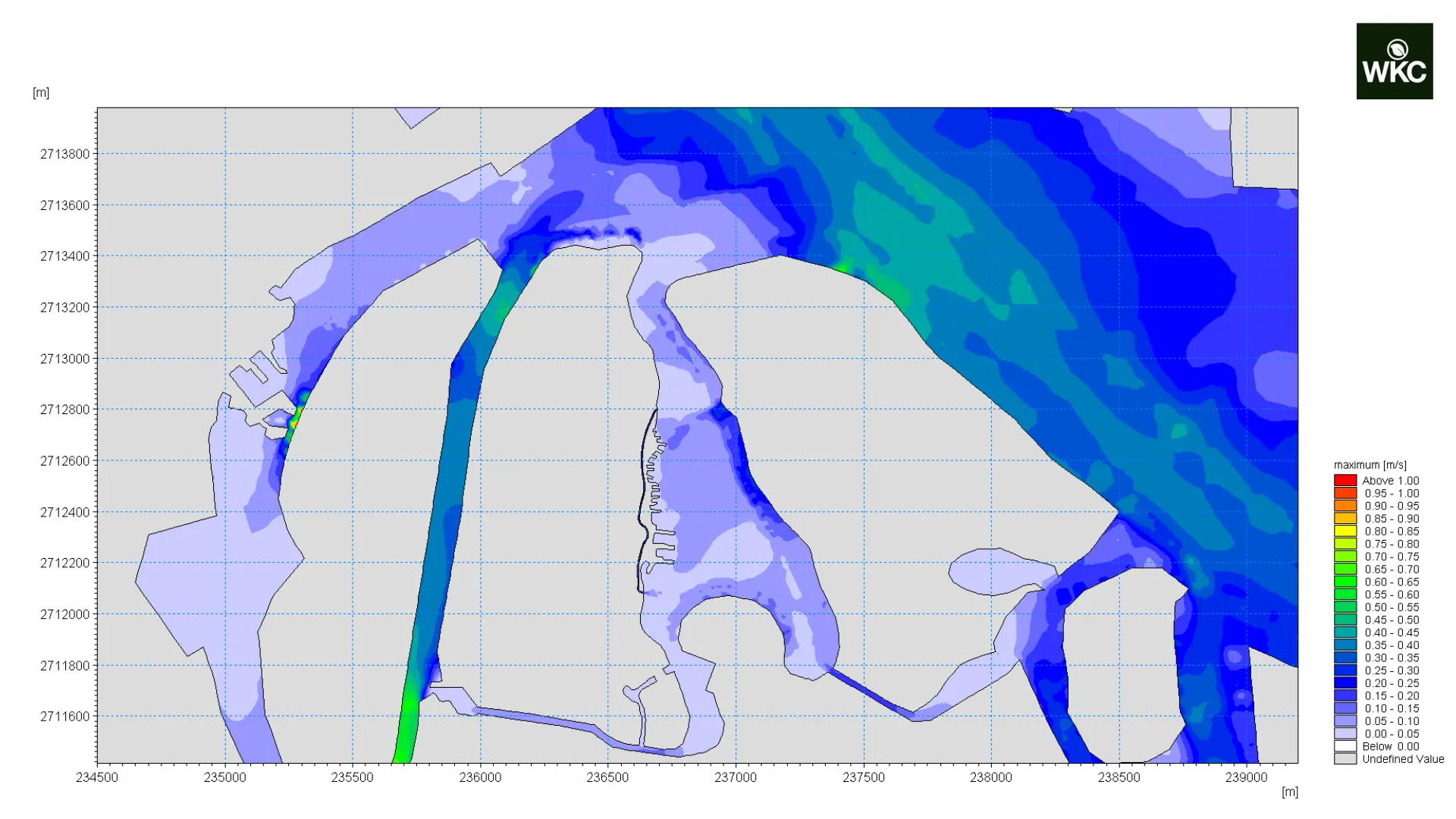
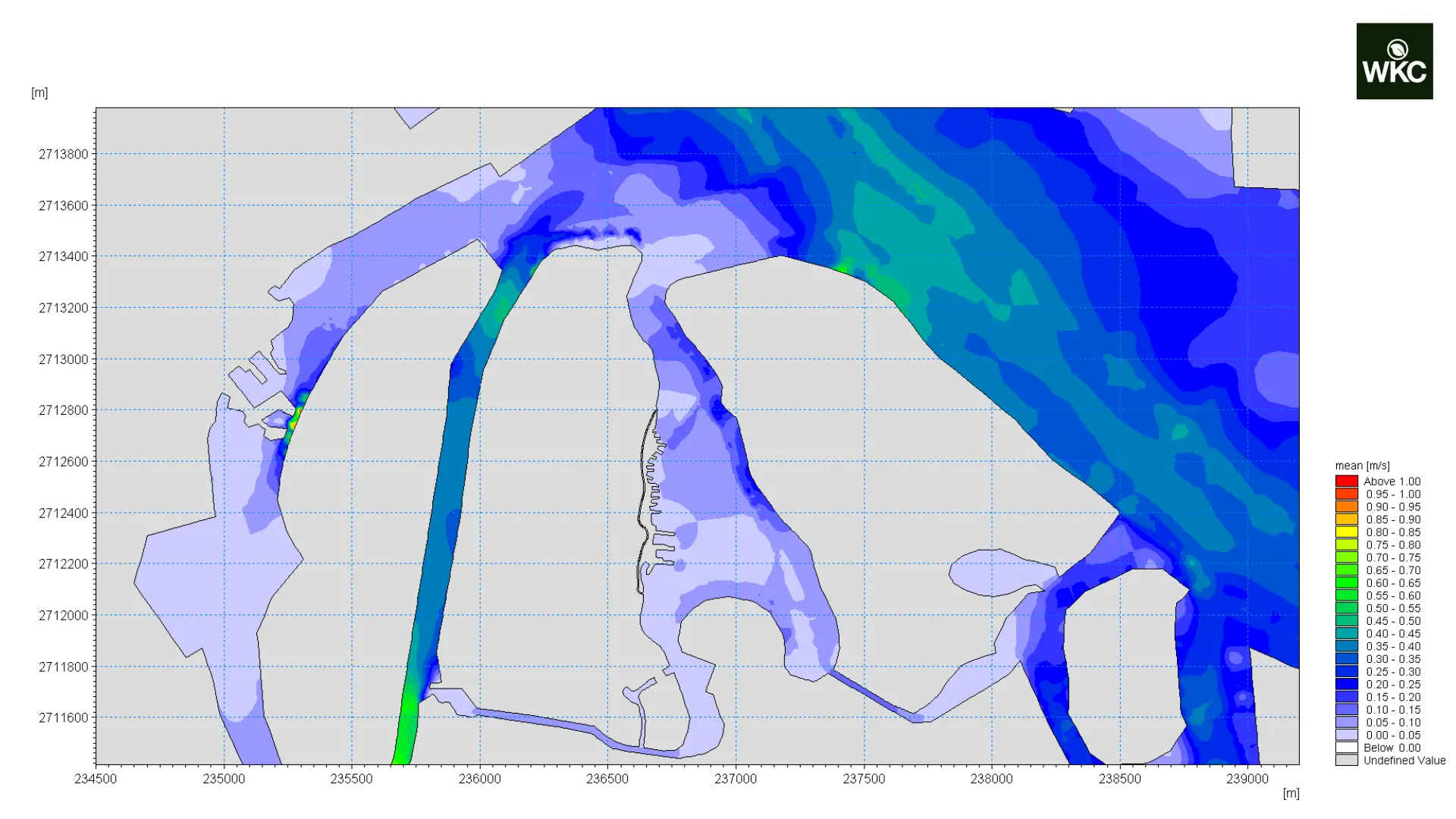
Comparing model scenarios helps identify where changing assumptions or conditions may materially influence predicted outcomes.
How Confident Are We in That Prediction, and Why?
“What does the model predict?” is of course an important question. But without also asking ‘’how confident are we in the predictions’, it lacks crucial context.
A decision-maker should be able to see what data were used, which assumptions were made, how the model was calibrated, how sensitive the results are and where the limits of interpretation lie.
There is also a temptation to assume that a more complicated model, a finer computational grid or a larger volume of data automatically produces a more accurate answer. It does not. Complexity can add value when it is relevant to the question, but unnecessary complexity can consume resources without meaningfully improving the decision.
What Makes a Hydrodynamic Model Useful?
The best model is not necessarily the most sophisticated one. It is the model that is:
- fit for its clearly defined purpose;
- supported by appropriate and proportionate data;
- calibrated and, where possible, validated against observations;
- tested against reasonable alternative assumptions and scenarios;
- documented transparently; and
- communicated in a way that decision-makers can understand and use.
Ultimately, we are not trying to build the ocean inside a computer. We are trying to build a useful approximation of it.
From Prediction to Better Decisions
Hydrodynamic modelling is most valuable when the technical work remains connected to the decision it is intended to support. That means selecting an appropriate level of complexity, gathering suitable evidence, challenging the assumptions and being open about uncertainty.
That is the difference between simply running a model and modelling responsibly.
Share This Post
Need a Model That Is Fit for Purpose?
WKC Group can help define the modelling question, evaluate uncertainty and translate technical results into practical environmental and engineering decisions.